Launch offer: free shipping and a gift from €70
About us · The hive

We do not sell honey. We safeguard what the hive knows how to do.

Melisa was born from an idea the market finds uncomfortable: that almost everything sold as a «hive product» has lost along the way the thing that made it valuable. We built the brand the other way round: starting from the bee, not from the shelf.
The problem

Almost nobody can prove where their honey comes from

In the European Commission’s border controls, 46 % of imported honey samples were found suspected of non-compliance with the European honey directive. On the label, «EU origin» can mean almost anything. Melisa exists so that question has an answer: batch by batch, with its analysis behind it.
Data: European Commission, coordinated action «From the Hives». 320 samples taken at the border between November 2021 and February 2022; results published in March 2023.
Our story

We started with a question nobody wanted to answer

Why can two honeys with the same label («flower honey», «EU origin») have nothing in common?
The answer lay in everything the label does not say: which flowering it comes from, which month it was harvested, at what temperature it was handled, how long it sat in a tank, how many hands touched it before it reached the jar. A living product, treated as an anonymous raw material.
Melisa was built to answer that question in every jar. Not with a slogan: with a batch code, a region, a flowering and a date.
We are not a honey brand that added supplements. We are a hive brand, complete, that started with honey because it was the most urgent thing to fix.
«The hive does not produce an ingredient. It produces a territory, a season and a labour. Our task is to erase none of the three.»
Who we are

Melisa is the bee house of Vitall

Melisa is part of Vitall Bienestar, alongside Almaté, our sister brand of teas and infusions. We share ownership, laboratory, standards and - what matters most - one way of understanding wellbeing. Vitall’s mission is explicit: to unite modern science and long-held knowledge in order to redefine and serve wellbeing. Its three pillars translate into Melisa like this:
01

We redefine wellbeing

Vitall looks after the balance between body, mind and environment. In a hive that balance is not a metaphor: it is literal. A healthy colony needs a healthy territory.
03

We create value

Vitall raises the value of local produce and traditional ingredients. At Melisa that means something concrete: the beekeeper is paid for quality. That is how good beekeeping survives.
02

We lead the change

The European bee sector carries opacity, adulteration and untraced imports. Melisa exists to show that another standard is workable.
Where we are going

To become the European reference for the complete hive

We do not aim to be the biggest honey brand. We aim to be the brand that is trusted when a product comes from a hive, whatever the product and whatever the format.
01

Depth before breadth

First, master the raw material: honey, propolis, royal jelly, pollen, bee bread and wax. Traced, analysed and counted. Without this, everything else is marketing.
02

From raw to formula, without losing the raw

On that base we build the derivatives, the bee supplements and the bee cosmetics. We think industrialisation is desirable: it allows constant doses, safety and scale. What is unacceptable is that it should denature.
03

Europe as the base, the wider Mediterranean as the horizon

We are born in Spain, we speak to Europe and we already operate towards the Arab world, where honey and propolis are not a wellness trend but an unbroken tradition. Halal suitable from the origin, with no alcohol at any stage.
What we do

Four levels, one material

From apiary to formula, a single chain of custody. The standard is ours at every stage: we set the conditions, the inputs and the controls, and we audit them, wherever the making happens.

Raw

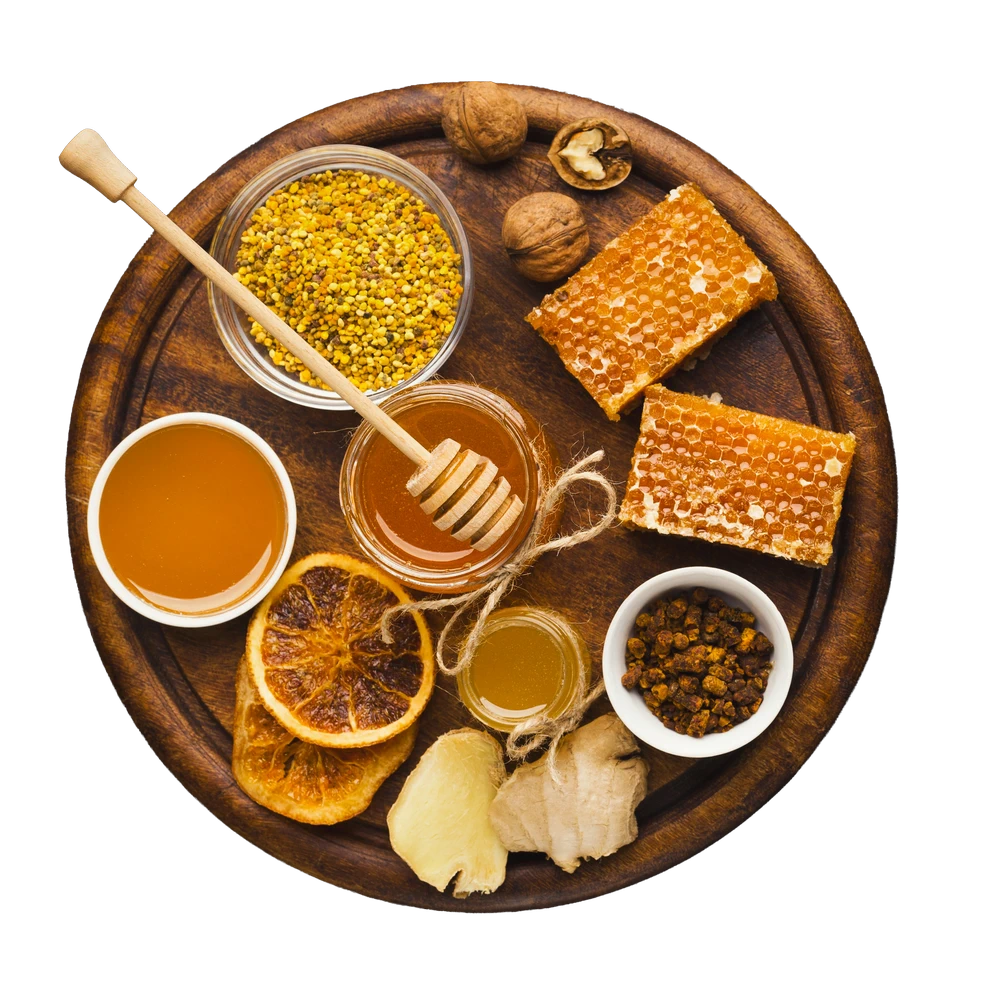
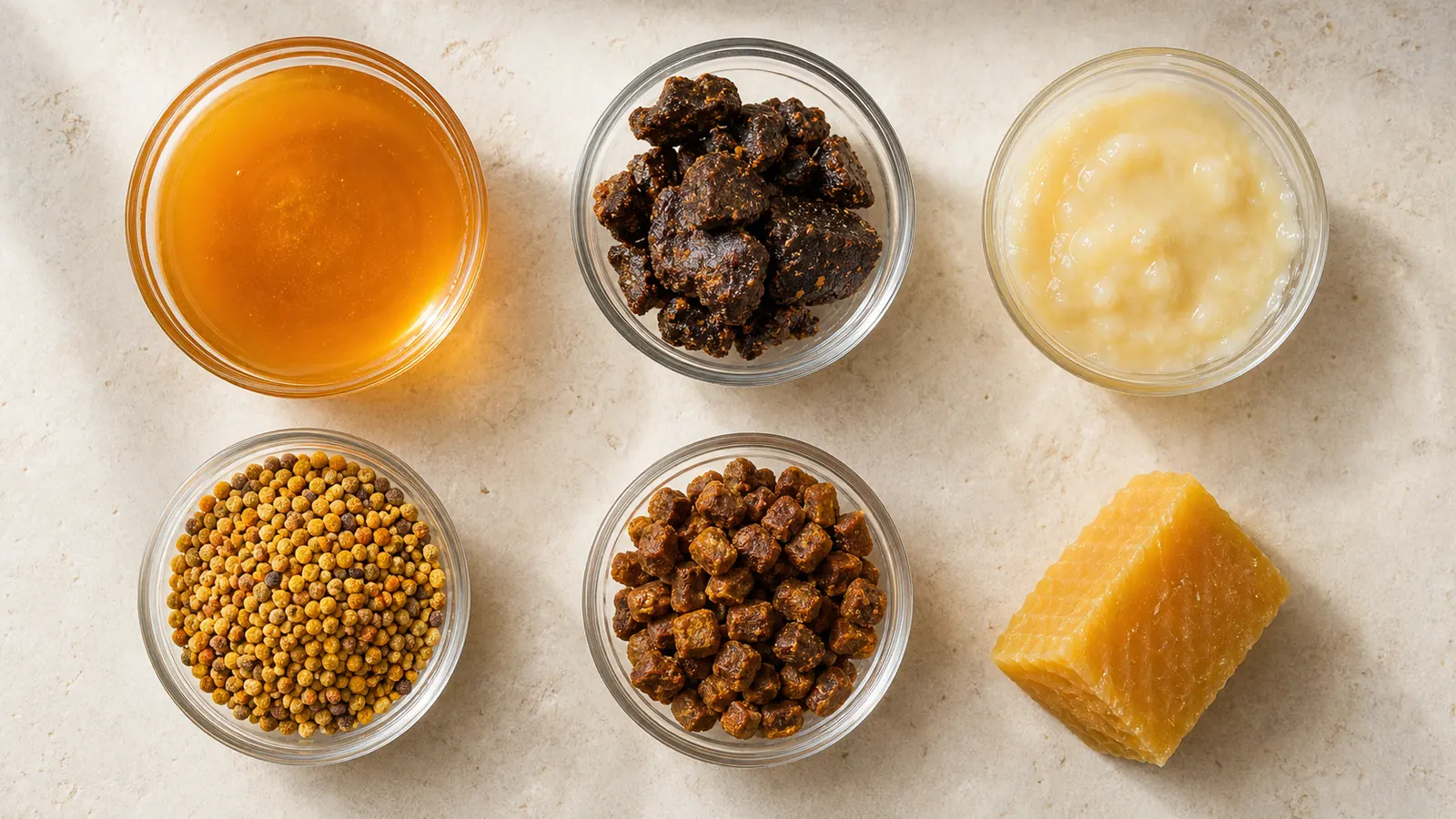
Monofloral and multifloral honey, pollen, bee bread, raw propolis, wax. The hive as it is, with the least possible intervention.

Derivatives

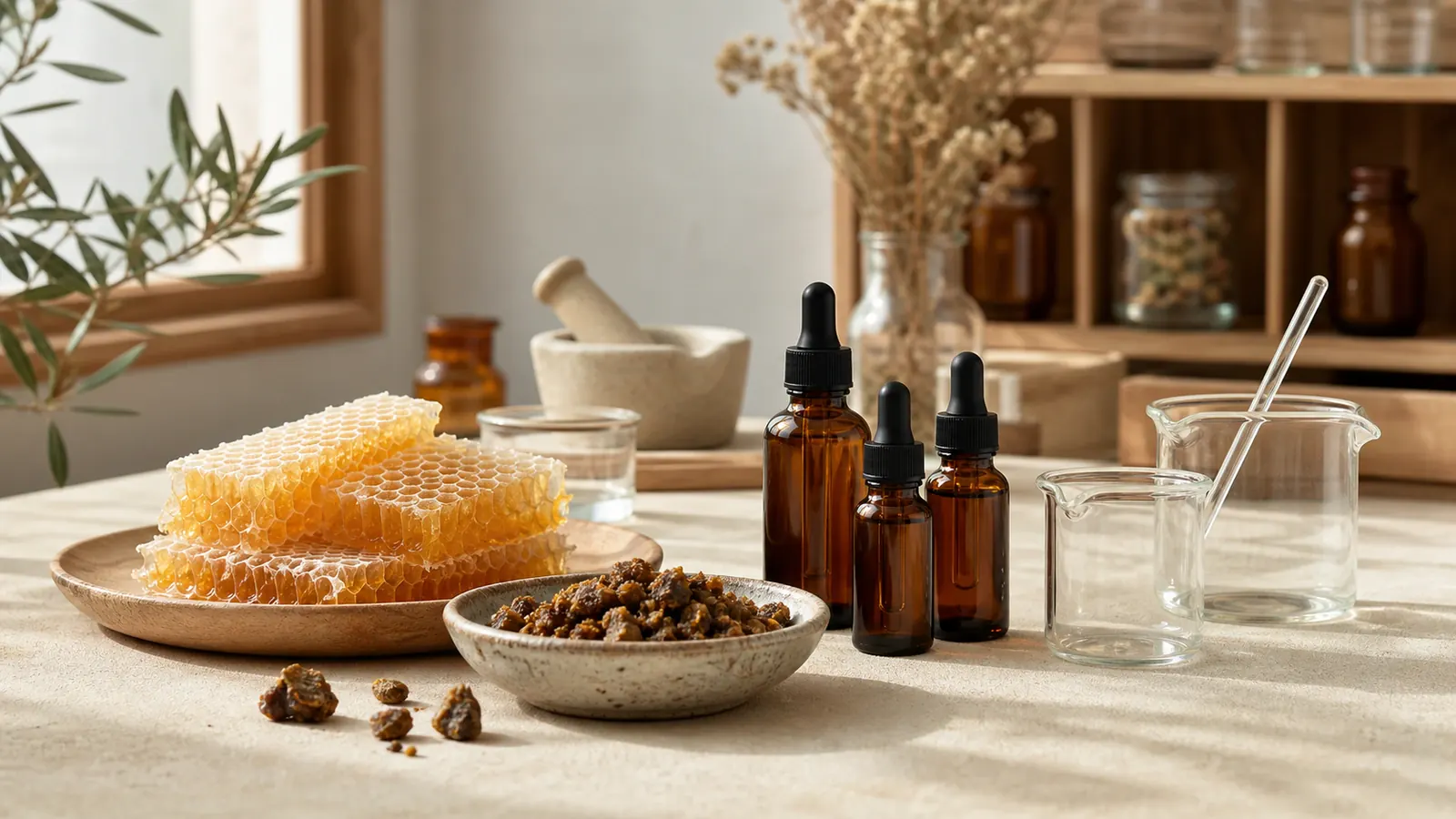
Extracts, tinctures, compound honeys and preparations. This is where transformation begins, and where the requirement to lose nothing on the way begins.

Bee supplements

COMING SOON
Royal jelly, propolis and pollen in constant, stable dose formats. Beekeeping tradition with the precision of a modern supplement.

Bee cosmetics

COMING SOON
Wax, honey and propolis applied to the skin. Bee cosmetics are among the oldest there are; our contribution is to make them to a contemporary standard.
What it means to be Melisa

An identity built to last

01

Spanish in its material

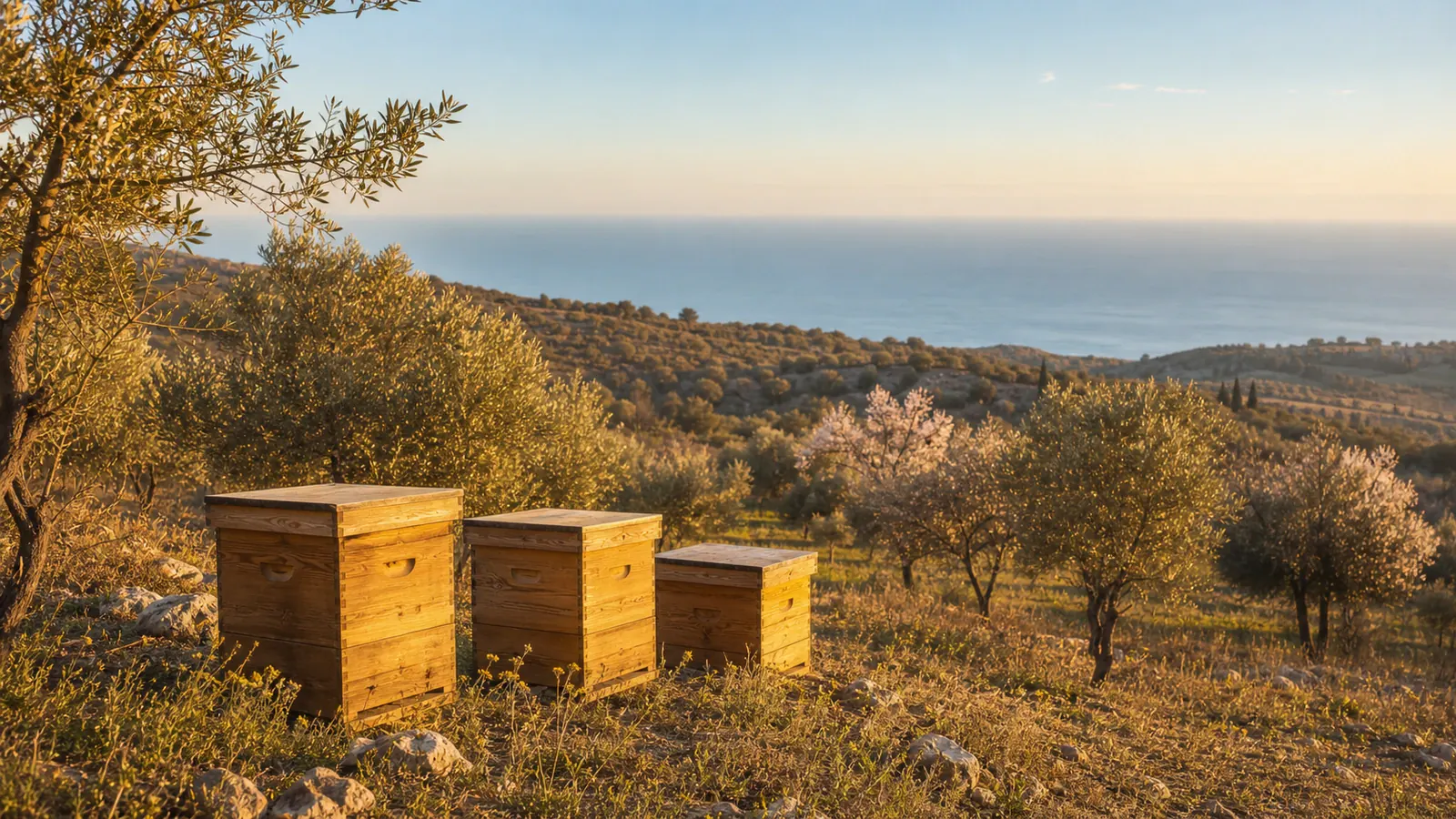
Our hives are here. La Alpujarra, los Arribes, el Jerte, las Hurdes, the Pyrenees, Galicia. A beekeeping map very few countries can match and almost nobody has told properly.
02

European in its rigour

We work to the highest analytical and regulatory standard in the world, and we treat it as a floor, not a ceiling.
03

Mediterranean and Arab in its calling

Honey and propolis have been food and remedy on both shores for centuries. We do not enter the Arab world as an export market: we enter it as someone returning to an old conversation.
Our customer

For those who no longer buy blind

We speak to people who read the label before the price. Who have understood that «natural» stopped meaning anything years ago and look for proof instead. Who would rather have one jar they can trace than three they cannot.
We also speak to trade customers (workshops, pharmacies, herbalists, produce-led hospitality) who need a supplier able to document what it sells.
The Melisa manifesto

We believe in a luxury that can be audited

For us, premium is not a pretty jar with a pretty story. It is the ability to answer any awkward question about the product (where it comes from, how it was treated, what it contains, who was paid for it) without changing the subject.
The rest is packaging.
Our foundation

Six pillars that decide for us

These are not decorative values. They are the criteria by which we reject batches, suppliers and commercial opportunities.
Icono de trazabilidad

Traceability

Every batch knows where it came from. Region, flowering, beekeeper, harvest date and analysis. If we cannot tell it, we do not sell it.
With a name attached
Icono de integridad del producto

Product integrity

The honey is neither pasteurised nor ultrafiltered. The pollen is not dried with aggressive heat. Every process decision is taken against a single criterion: what survives.
No shortcuts
Icono de evidencia analítica

Evidence

We analyse what others declare. HMF, moisture, conductivity, pollen profile. Analysis is not an export formality: it is how we know whether the work was done well.
With data
Icono de territorio

Territory

Every comarca has its flowering and its time of year. We do not homogenise so that everything always tastes the same. The variation is the product, not a defect.
With roots
Icono de la colonia primero

The colony first

We buy from beekeepers who do not squeeze the hive. An exhausted colony gives a poor product: ethics and quality point the same way here.
With respect
Icono de belleza útil

Useful beauty

The design, the glass, the text on the label. None of it is ornament: it is the way of treating the customer as someone who can read.
With judgement
The standard

What we measure, and what we measure it against

We publish the standard, not the paperwork. A certificate of analysis is an internal document and proves little on its own. What can be judged is what gets measured in every batch and what limit it has to meet. These are the parameters that legally define a honey in Spain and in the European Union, and against which every batch is checked.
MOISTURE

No more than 20 %

Water is what decides whether a honey ferments. The rule allows up to 23 % for heather (Calluna), which is naturally wetter.
HMF

No more than 40 mg/kg

Hydroxymethylfurfural rises with heat and with time. It is the indicator of whether a honey has been forced in the workshop or stored too long.
DIASTASE INDEX

No less than 8 on the Schade scale

Honey’s own enzymes are destroyed by heating. If they do not show up, the honey has been somewhere it should not. In honeys naturally low in enzymes, such as citrus, the minimum drops to 3.
ELECTRICAL CONDUCTIVITY

No more than 0,8 mS/cm

This is what allows the declared honey type to be confirmed. For honeydew and chestnut the criterion inverts: no less than 0,8.
SUGARS

Fructose and glucose, minimum 60 g/100 g

For flower honey. Sucrose cannot exceed 5 g/100 g: an excess points to artificial feeding or added syrup.
FREE ACIDITY

No more than 50 milliequivalents per kilo

Acidity above the limit indicates fermentation. Together with moisture, it is the pair that gives away a badly harvested or badly stored honey.
Limits from Royal Decree 1049/2003, the quality standard for honey, which transposes Directive 2001/110/EC. These are legal minimums, not a target: a batch can meet them all and still not get in.
Rejection criteria

What we do not buy

A standard only means something if something stays out. These are the reasons a batch does not get in, even when the price is good and the season has been short.

Honey without verifiable origin

If we cannot trace the apiary and the flowering, we do not buy it. Without origin there is no batch, and without a batch there is nothing to check.

Blends from several countries

They are legal and they are on the market. They are not our product: they break the only thing we sell, which is knowing where each jar comes from.

Out of parameter

A batch that fails moisture, HMF, diastase or conductivity does not get in, even if the difference is small. The limit is not renegotiated mid-season.

Signs of adulteration

High sucrose or an anomalous sugar profile end the conversation. No explanation is requested, the batch goes back.

Honey forced with heat

Pasteurising or heating in order to filter leaves a trace in the HMF and in the enzymes. We buy honey that has not been through that.

Residues

Traces of veterinary treatments or plant protection products above the permitted level rule out the whole batch, not the affected part.
We do not publish a rejection percentage. It would be easy to write and hard to check, and this is exactly the kind of figure we would rather be able to prove than announce.
Why Melisa

Ten reasons that can be verified

We are not asking to be believed. We are asking to be checked.
01

The complete hive, not just the honey

Honey, propolis, royal jelly, pollen, bee bread and wax: raw, derived, as a supplement and as cosmetics. Very few European brands cover the whole matrix; most are honey brands with something added.
02

Traceability by batch, not by brand

The jar code returns region, flowering, beekeeper and date. Generic traceability («origin Spain») is not traceability: it is geography.
03

Our own analysis as the rule

HMF, moisture and pollen profile in every batch. HMF in particular gives away heat and time: it is the indicator that reveals whether a honey has been mistreated, and that is why almost nobody publishes it.
04

Industrialisation that does not denature

We process cold and with serious process control. Industrial scale and a living product are not incompatible: what is incompatible is scale with carelessness.
05

Halal suitable from the origin

No alcohol from the raw material onwards, not adapted afterwards for export. It opens the Arab world to us with real credibility and forces a more demanding process standard for everyone. Halal certification is in progress.
06

Vitall’s scientific backing

Formulation, control and R&D shared with a group that works simultaneously with scientific evidence and with ethnomedical knowledge. We do not improvise formulas: we inherit them and we validate them.
07

A fair price to the beekeeper, paid for quality

We pay on the analysis, not by the kilo. It is more expensive and slower, and it is the only policy compatible with demanding excellence year after year.
08

Real territorial diversity

Spanish comarcas each with their own flowering calendar. We do not buy one base honey and label it several ways.
09

Club Colmena

A subscription (monthly box, letter from the beekeeper, early access to limited harvests) that funds the producer in advance and steadies demand. It benefits both ends of the chain.
10

Editorial transparency

The Journal publishes what is normally hidden: what HMF is, why honey crystallises, how to read a label. Educating the customer makes them more demanding, of us too. We consider that an advantage.
The Melisa manifesto

We believe in a luxury that can be audited

For us, premium is not a pretty jar with a pretty story. It is the ability to answer any awkward question about the product (where it comes from, how it was treated, what it contains, who was paid for it) without changing the subject.
The rest is packaging.
Free shipping from €45
24-48 h in mainland Spain
14 days to withdraw
As provided by law, except opened food
Secure payment
Shop with confidence
Personal support
We are here to help
© 2026 Melisa · Vitall Bienestar, S.L. All rights reserved.
Made with ♥ by bee lovers
Deutsch English Español Français Nederlands Português العربية
AED د.إ DZD د.ج EUR GBP £ MAD د.م. SAR ر.س