We sell honey, but it is not the most valuable thing that leaves a hive. The most valuable thing is an invisible service that underpins a good part of what we eat and appears on no invoice. The figures, looked at closely, are uncomfortable.
A service worth hundreds of billions
The IPBES global assessment on pollinators, pollination and food production, produced by 77 experts and drawing on close to 3,000 scientific works, puts the annual value of agricultural output that depends directly on pollinators at between 235 and 577 billion US dollars.1
That same report warns that more than 40% of invertebrate pollinator species (bees and butterflies above all) face a risk of extinction, alongside 16.5% of vertebrate pollinators such as bats and birds.2
What actually depends on a bee
It is worth being precise, because the figure is frequently exaggerated. It is not true that a third of our food would disappear without pollinators: the staple cereals (wheat, rice, maize) are wind pollinated and would go on being produced unchanged.
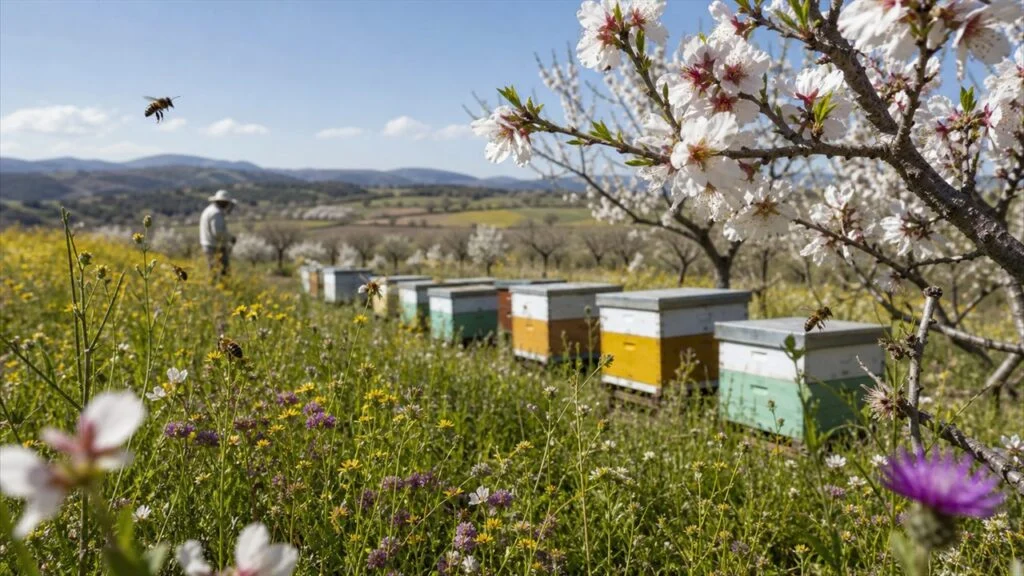
What would be lost is almost everything else: almond, apple, cherry, courgette, coffee, cocoa, avocado, many oilseeds. In other words the diversity and nutritional density of the diet, not its caloric volume. Reviews of the economic value of pollination quantify that dependence crop by crop, with very different degrees according to the species.3
The IPBES report adds a layer that is often forgotten: pollinators also sustain biofuel crops, fibres such as cotton, medicinal plants, livestock forage and construction materials.1
The honey bee is not the protagonist
A question of focus
Apis mellifera is a managed species: we care for it, feed it, treat it and transport it. It is not threatened in the way the thousands of species of wild bees, bumblebees and flies are, and those do a good part of the real work, often more effectively per flower visited.
Putting hives out does not save the bees. In impoverished landscapes it can even increase competition for a scarce floral resource. What helps wild pollinators is something else: hedgerows, unmown margins, staggered flowering, available nesting sites and less chemical pressure. The FAO maintains technical and outreach material on pollination services aimed at precisely that.4
What it means for a small beekeeper
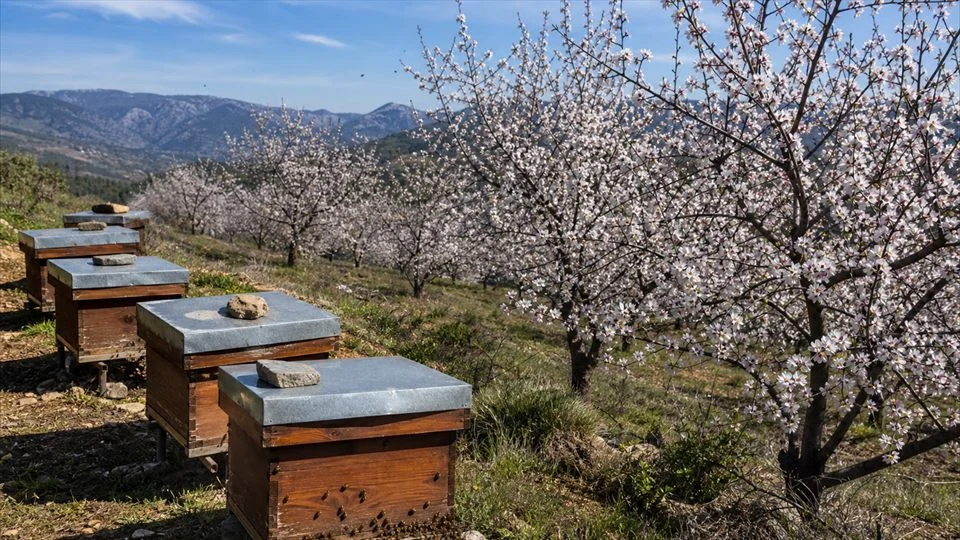
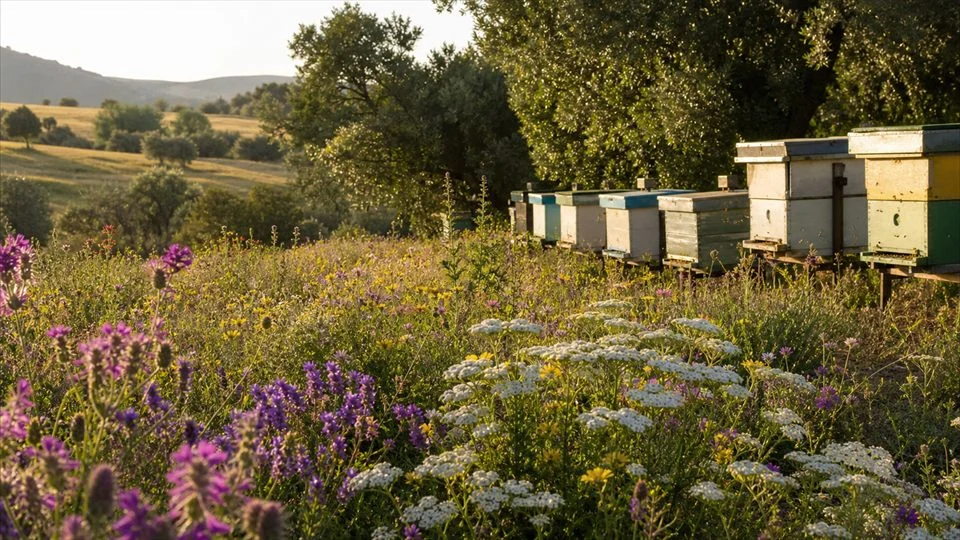
It means the most important decision of the year is not how much honey is taken, but where the hives are placed and how much is left to them. An overexploited apiary yields more kilos one year and weak colonies the next.
In practice, for us it comes down to three rules:
- Low density per site. Fewer hives per apiary than the regulations allow.
- Winter stores above the usual level. We harvest less in autumn so we do not have to feed in January.
- Distance from intensive agriculture. No treated crops for several kilometres around.
What someone without hives can do
Buying local, traceable honey helps, but a good deal less than these three things: leaving part of the garden unmown between April and September; planting native species with staggered flowering from February to October; and avoiding systemic insecticides during bloom.
A hive is worth far more than its honey. We live from the honey, but it is worth saying out loud which of the two matters more.
References
- IPBES (2016). The assessment report on pollinators, pollination and food production. Intergovernmental Science-Policy Platform on Biodiversity and Ecosystem Services, Bonn. https://www.ipbes.net/assessment-reports/pollinators
- IPBES Secretariat (2016). Pollinators vital to our food supply under threat (press release). IPBES, Kuala Lumpur. https://www.ipbes.net/node/11774
- Khalifa, S. A. M., et al. (2021). Overview of bee pollination and its economic value for crop production. Insects, 12(8), 688. https://www.ncbi.nlm.nih.gov/pmc/articles/PMC8396518/
- FAO (2018). Global action on pollination services for sustainable agriculture. Food and Agriculture Organization of the United Nations, Roma. https://www.fao.org/pollination/resources/assessment/en
- Consejo de la Unión Europea (2001). Directiva 2001/110/CE del Consejo, de 20 de diciembre de 2001, relativa a la miel. Diario Oficial de las Comunidades Europeas, L 10, 47–52. https://eur-lex.europa.eu/legal-content/ES/TXT/?uri=CELEX%3A32001L0110
- FAO & OMS (2022). Standard for Honey (CXS 12-1981, rev. 2022). Codex Alimentarius Commission, Roma. https://www.fao.org/fao-who-codexalimentarius/codex-texts/list-standards/en/
- Bogdanov, S., Martin, P. & Lüllmann, C. (International Honey Commission) (2009). Harmonised methods of the International Honey Commission. IHC Platform, Swiss Bee Research Centre. https://www.ihc-platform.net/ihcmethods2009.pdf